


- Results
- Services

- Resources
- Careers
- About Us
 Work with us

March 25, 2026
Scaling paid media is often treated like a budget decision.
But in reality, scaling is a systems decision. Increasing ad spend will only amplify what already exists in your business. Before you increase budgets, take a step back and evaluate whether the foundation of your growth engine is actually ready to support scale.
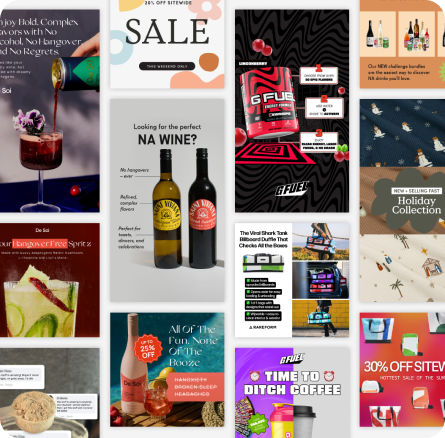
Creative performance is the biggest driver of paid media success today. And launching new ads is how you get an account to scale.
Across many DTC brands, Motion sees ~7% as a strong benchmark for creative hit rate. Meaning roughly 7% of the ads you launch become meaningful spend drivers that also hit your ROAS or CPA goal. If you work with Structured, we average a 15% hit rate which gives brands a leg up as they start to scale.
Offer strength often determines whether ads can scale profitably. If you have tried to scale in the past without a strong offer and were unsuccessful, it’s likely due to the offer that’s live not working for a broad audience.
Examples of offers to test:
Paid media rarely works in isolation.
Once a new customer arrives, your lifecycle marketing should reinforce the same growth objective. Whether that’s subscriptions, AOV growth, or repeat purchases.
Without lifecycle support, paid media often ends up doing too much heavy lifting and the work done on paid media isn’t exploited for efficiency gains later.
Consistent creative testing is a major indicator of whether a brand can scale.
High-performing brands typically launch new creative every week, giving the algorithm fresh opportunities to find winners.
But volume alone isn’t enough—ads should also be diverse in format and messaging.
For most scaling DTC brands, Meta remains the primary acquisition engine.
A common benchmark we see is:
Your Marketing Efficiency Ratio (MER)—ad spend divided by total site revenue—is one of the clearest indicators of overall marketing health.
Before scaling spend, a useful benchmark is:
If your MER is already high, increasing spend can quickly erode profitability.
Retargeting is important, but it should not dominate your budget. When retargeting spend becomes too large, it often means your growth is overly dependent on existing demand rather than new customer acquisition.
A common benchmark: Retargeting should represent 10% or less of Meta spend
Google Brand campaigns are often one of the highest-return channels in a DTC marketing mix, but many brands will over-invest in brand which can be a vanity metric that props up performance.
If you are currently spending 25% or more of their Google spend on brand search, that is concerning as you start to scale your paid media program and should be reduced. This will show that you don’t have a heavy reliance on something that is regularly performant at low-scale.
Brands that scale efficiently usually have the same fundamentals in place: strong creative testing, compelling offers, lifecycle support, disciplined channel allocation, and clear performance benchmarks. When those elements are working together, increasing budgets becomes far less risky and far more predictable. Before pushing spend higher, make sure the engine underneath is built to handle the acceleration.
Our curated, industry-leading insights will help you grow your brand.
See all


© 2025 Structured. All Rights Reserved. | Privacy Policy


